Talent Professionals are the canaries in the coalmine when it comes to the future of work.
You’re literally there, in the changing environment. You hear first-hand both the big, and little, worker moods – the shifts that workers are having around why they are or aren’t changing jobs, and the shifts in the attitudes they have towards work. You see the changes in the labour market and you’re hearing candidates talk and ask questions about the issues that really matter to them – such as climate change or flexibility policies – when they consider whether or not to join your organisation.
There’s no doubt that Talent Professionals are the most well positioned people in the workforce to capture those live insights about our changing work context.
What does change really mean?
Futures work isn’t just about managing change, it’s about understanding the changing context around us, and why we should care about it. It’s about understanding the opportunities and risks that exist for us in the present and figuring out what we need to do about them.
The intention of this work is to understand how we can make more informed, and more resilient, decisions today. How can our insights about what’s changing inform a more competitive position?
It’s also worth unpacking the assumption about how change happens. It’s implicitly understood that we think change in an organisation occurs from a leadership team. However, a lot of organisational change is actually dispersed within an organisation.
Flipping that assumption about how change occurs is important because it allows us to take more agency. In other words, the work you are doing really does have an impact on changing the organisation.
How can you be more methodical in those insights that you’re noticing, and how can you use those insights to inform your actions in the present?
Put all of this together, and it says to me that Talent professionals are the ones who should be leading the future of work conversations across the whole organisation, including with leadership. TA are in an outstanding position to lead the conversation around the change of work in the present.
This article is an excerpt of a webinar discussion that took place with Dart Lindsley in September 2023. Watch the full discussion here.
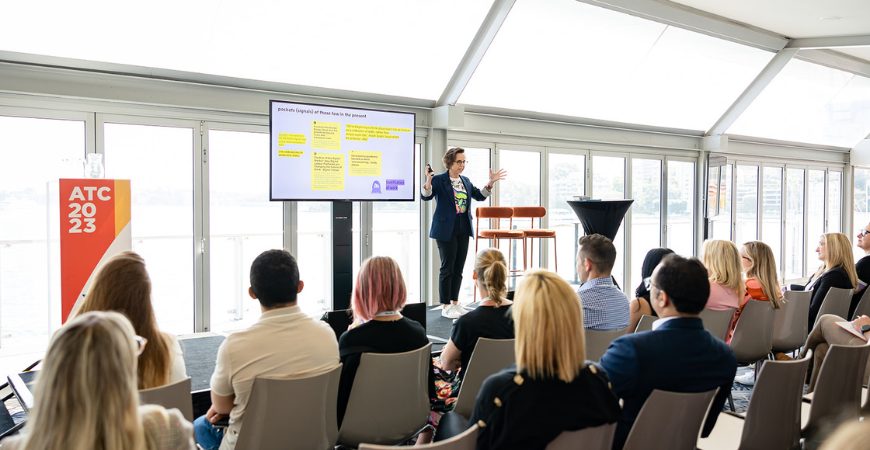
Image Source: photo taken at ATC2023.